
Discover the Beauty of Free Trees in Richmond
2025 Tree Giveaway
Join us on Saturday, November 1st for a first-come, first-serve tree giveaway for the residents of the City of Richmond.
The 2025 event requires no reservations and runs from 9:30 AM – 3:00 PM or until all trees are claimed. We will be located at3602 Hawthorne Ave. (St. Thomas Episcopal Church)
We will have 16 species of tree available to suit a wide variety of landscapes. All species will be in 1 gallon pots. There will be a limit of two trees per household.

Benefits of the Tree Giveaway
Enhance Neighborhood Greenery
Participating in the tree giveaway helps to beautify your surroundings, creating lush, green spaces that everyone can enjoy. Plus they increase the value and curb appeal of your home!
Boost Community Well-being
Trees provide shade, improve air quality, and offer a serene environment, contributing to the overall health and happiness of the community.
Support Environmental Sustainability
By planting trees, you’re playing a crucial role in reducing carbon footprints and promoting biodiversity in Richmond.
Species Available in the 2025 Giveaway
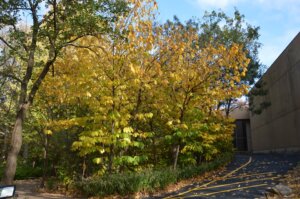
Pawpaw
Asimina triloba
Pawpaw fruit, with a complex tropical taste (some say banana-mango- citrus) and custard-like texture, is the largest edible fruit native to North America and gives rise to common names like False Banana and Custard Apple. Unpalatable to deer, Pawpaw is increasingly prevalent in the upland understories deer frequent. It commonly grows in river valleys and bottomlands in the Mid-Atlantic Region from southern Pennsylvania through Virginia.
River Birch
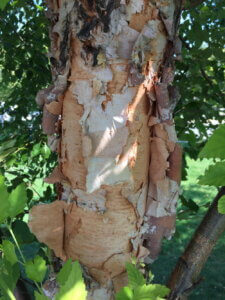
Betula nigra
Noted for beautiful, exfoliating bark, River Birch is an excellent food source for wildlife, supporting hundreds of species of butterflies, moths, and songbirds. It is commonly found in the Piedmont and Coastal Plain of the Mid-Atlantic Region from Pennsylvania to Virginia.
Sweet Shrub
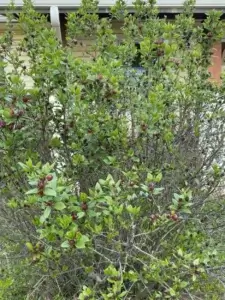
Calycanthus floridus
This trouble-free shrub, also known as Carolina Allspice, delights the senses with fragrant, showy flowers when planted as a specimen or a screening hedge near a front door or patio. While primarily native to several southeastern states, it does well in central Virginia.
Pignut Hickory
Carya glabra
Pignut hickory is best grown in humusy, rich, medium moisture, well-drained soils in full sun to part shade. Best performance occurs in moist soils. Plants are generally intolerant of shade. This tree needs a large space within which to grow. Leaves turn an attractive yellow in fall.

Button Bush
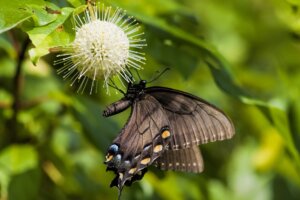
Cephalanthus occidentalis
Native Buttonbush, a wildlife favorite, is so common it is often overlooked. However, those who frequent sites along ponds and rivers likely recognize its sweet-scented, one-inch flower heads—suggestive of round pincushions when in bloom in summer.
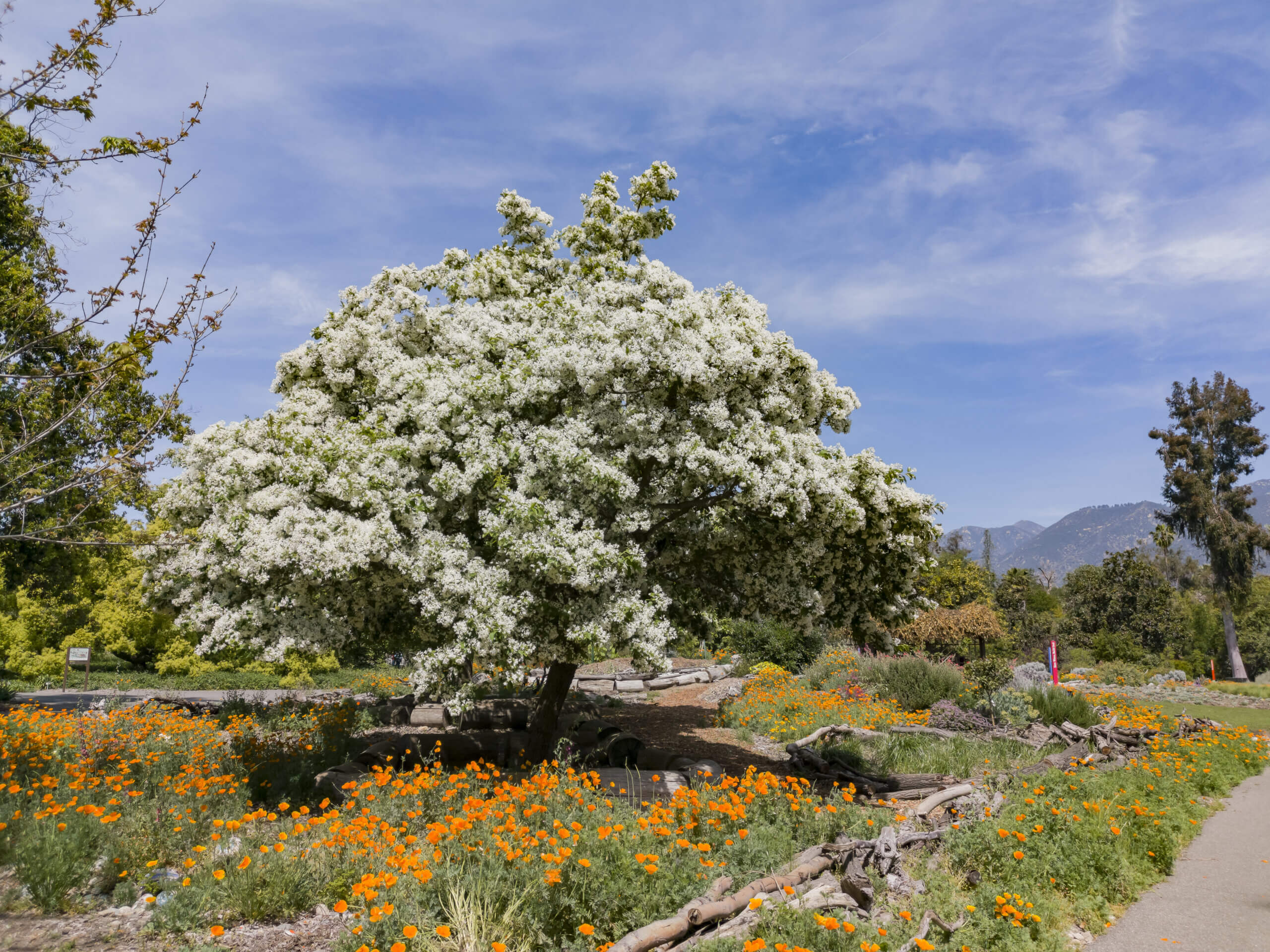
Fringe Tree
Chionanthus virginicus
The ethereal spring bloom of the fringe-tree, Chionanthus virginicus, qualifies this plant as one of North America’s most beautiful small flowering trees. Fringe-tree’s showy bloom delights any who visit this plant’s native habitats along streams, small rivers, and in drier sites at higher elevations throughout Virginia.
Sweet Pepper Bush
Clethra alnifolia
Summer sweet and spicy is the pleasant fragrance of this pollinator magnet that naturalizes readily in shady, damp places as well as coastal landscapes. The Virginia Native Plant Society honored Sweet Pepperbush as Wildflower of the Year in 2015.

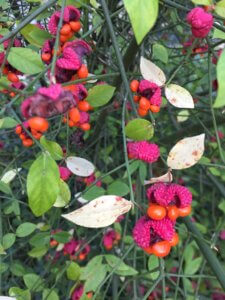
Strawberry Bush
Euonymus americanus
This native shrub gives a spectacular show each fall. The raspberry color husks of the seed capsules burst open to reveal DayGlo orange covered seeds, hence the common name Heart’s-a-Bustin’. This surreal effect is fun to show children and adults!
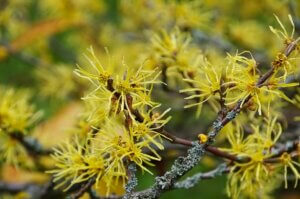
Witch Hazel
Hamamelis virginiana
In 1994, the American Forestry Association recorded the largest Witch Hazel tree at 34.8 feet high in Bedford, Virginia. The last native shrub to bloom in autumn, its fragrant, yellow, spider-like flowers illuminate the landscape as leaves fall. Fruit matures the second season.
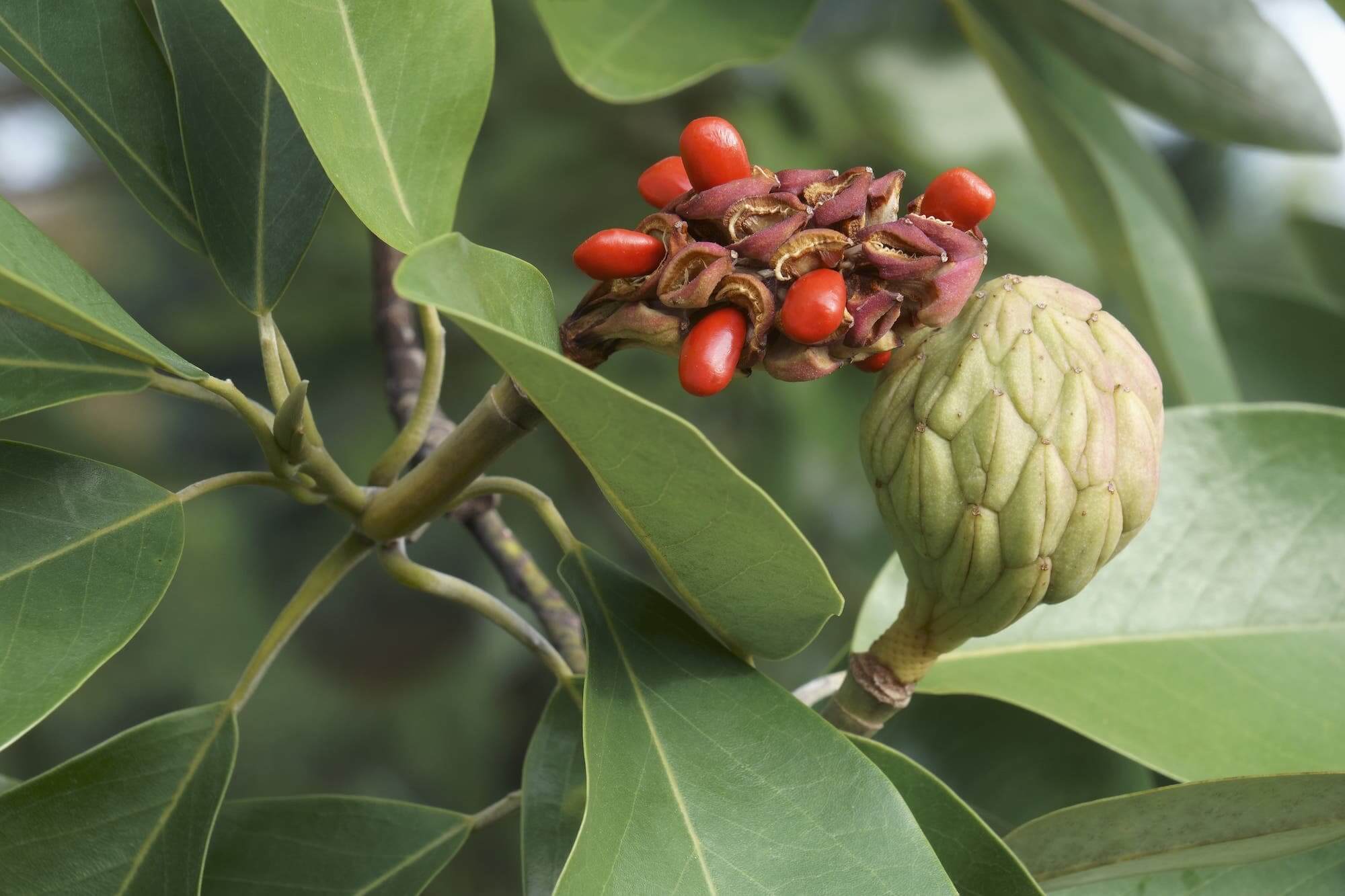
Sweetbay Magnolia
Magnolia virginiana
Lovely, lemon-scented, cup-shaped flowers appear mid-spring and bloom intermittently throughout summer, followed by showy, cone-like fruit. This elegant tree appears in two forms: often multi-trunked and deciduous north of North Carolina and single-trunked and evergreen southward. It is native to lowlands and freshwater swamps along the Mid-Atlantic and Gulf coasts.
Loblolly Pine
Pinus taeda
The loblolly pine is a tall evergreen tree with long, thin needles and scaly bark. It grows along the edges of the Chesapeake Bay and its tidal rivers and wetlands.

Shumard Oak
Quercus shumardii
Shumard oak is a southern bottomland species with bright red fall color. It grows best on moist, well-drained loamy soils. Red oaks are a durable, long-lived species growing up to 100 feet tall with age. Supports over 500 pollinator species!

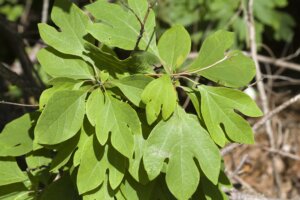
Sassafras
Sassafras albidum
Sassafras offers three-season interest: globelike clusters of chartreuse flowers in spring, leaves with three distinct shapes, dark blue fruit in red cups in summer, and foliage ranging from orange to crimson to purple in fall. This native is common in wood edges throughout the Mid-Atlantic Region.
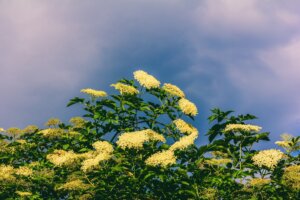
Elderberry
Sambucus canadensis
American Elderberry is a common, deciduous shrub that lights up our landscape from mid-May through June with huge and profuse clusters of white flowers that literally form a lacy veil over the shrub. The juicy fruit is edible when cooked and has long been a favorite for making pies, jams and jellies and even Elderberry Wine and pancakes.
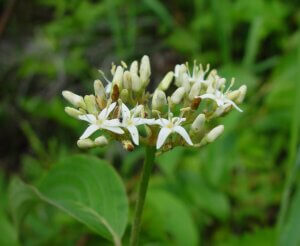
Silky Dogwood
Swida amomum
Silky dogwood is a native, medium- to large-sized, deciduous shrub. It is native to Virginia and is typically found in swamp borders, wetlands, and near streams and ponds.
The silky dogwood prefers well-drained medium to wet acidic soils. It may be grown in full sun or partial shade, and it even tolerates close to full shade. Consider the silky dogwood for moist woodlands, naturalized areas, or sites near streams/ponds. It is also effective for erosion control.
Tree Giveaway FAQs
Learn more about how you can receive a free tree and contribute to Richmond’s green future.
Who is eligible for a free tree?
All Richmond households are eligible to claim 2 free trees. Proof of residency may be required.
How do I apply for a free tree?
No application is required. Simply join us at 3602 Hawthorne Ave Richmond, VA 23222 after 9:30 AM on Saturday, November 1st.
What types of trees are available?
We offer a variety of native species suitable for Richmond’s climate, including oaks, maples, and dogwoods.
Can I choose the type of tree I receive?
Yes, you can select your preferred tree species based on availability at the event. Scroll down for information on the available trees.
How many trees can I receive?
Each household is eligible to receive two trees.
Do I need to bring anything to the event?
Please bring a form of identification and proof of Richmond residency.
What if I can't attend the event?
If you cannot attend, you may designate someone to pick up a tree on your behalf with prior arrangement.
How can I volunteer with Richmond Tree Stewards?
Visit our website to learn about volunteer opportunities and training to become a steward.
What should I do after receiving my tree?
We provide planting instructions and care tips to help your new tree thrive.
Donate to the Richmond Tree Stewards
Consider a donation to the organization to improve our ability to give away more trees in the future.